Medora Health
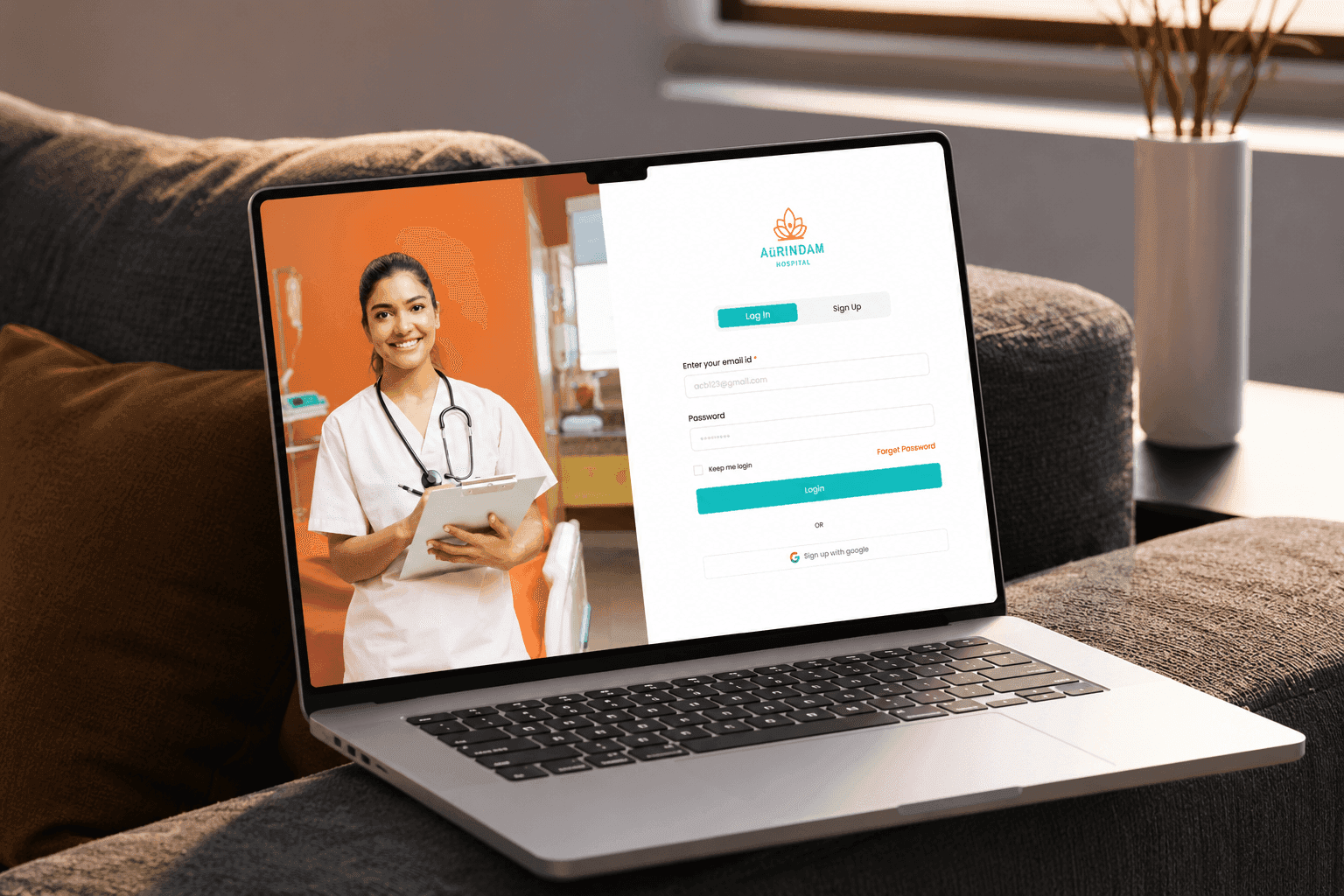
A hospital platform where patients book doctors in minutes and staff manage appointments, records, and prescriptions in one system.
- Industry
- Healthcare
- Timeline
- 12 months
- Services
- Product design, UX/UI design, Web and mobile development, Cloud infrastructure
Medora Health connects the four groups inside a hospital: patients, doctors, reception staff, and administrators. Each group gets its own app or dashboard, but they all share the same information.
Patients find a doctor, book an appointment, manage their family's profiles, and read their reports. Doctors and staff manage schedules, patient records, consultations, and prescriptions from one place. Gunpowder Innovations designed and built the whole system.
The challenge
Booking a hospital appointment is often slow and frustrating. Patients do not know which doctor to see, when that doctor is free, or how to get their old records.
Staff have the same problem from the other side. Appointments, patient histories, and consultation notes sit in different systems or on paper, spread across departments.
The hospital needed one platform that served everyone at once, without making any group's job harder. It had to cover appointment booking, doctor search, patient profiles, family members, medical history, prescriptions, consultations, and hospital administration.
What we built
We built four connected experiences: a patient app, a doctor app, a reception portal, and a hospital admin dashboard. Each role sees only the tools it needs, but the patient's journey stays joined up from booking to prescription.
Appointment booking. Patients choose a doctor by name, speciality, symptom, or free time slot.
Doctor search. Browse doctors by speciality, experience, availability, and ratings.
Search by symptom. Patients who do not know which specialist to see can describe the problem and get suggestions.
Family profiles. One account can hold profiles for children, parents, and other family members, so booking for them is quick.
Patient registration. New patients enter their details, medical history, and emergency contacts once.
Medical records. Reports, prescriptions, diagnoses, and past consultations are stored safely and easy to reach.
Appointment management. Upcoming, completed, cancelled, and rescheduled appointments all appear in one list.
Digital prescriptions. Doctors write diagnoses, prescriptions, lab requests, and treatment plans in the app.
Doctor dashboard. Doctors see their day, their patient queue, and each patient's history before the consultation.
Reminders. Automatic messages remind patients about appointments, which cuts down on missed visits.
Design approach
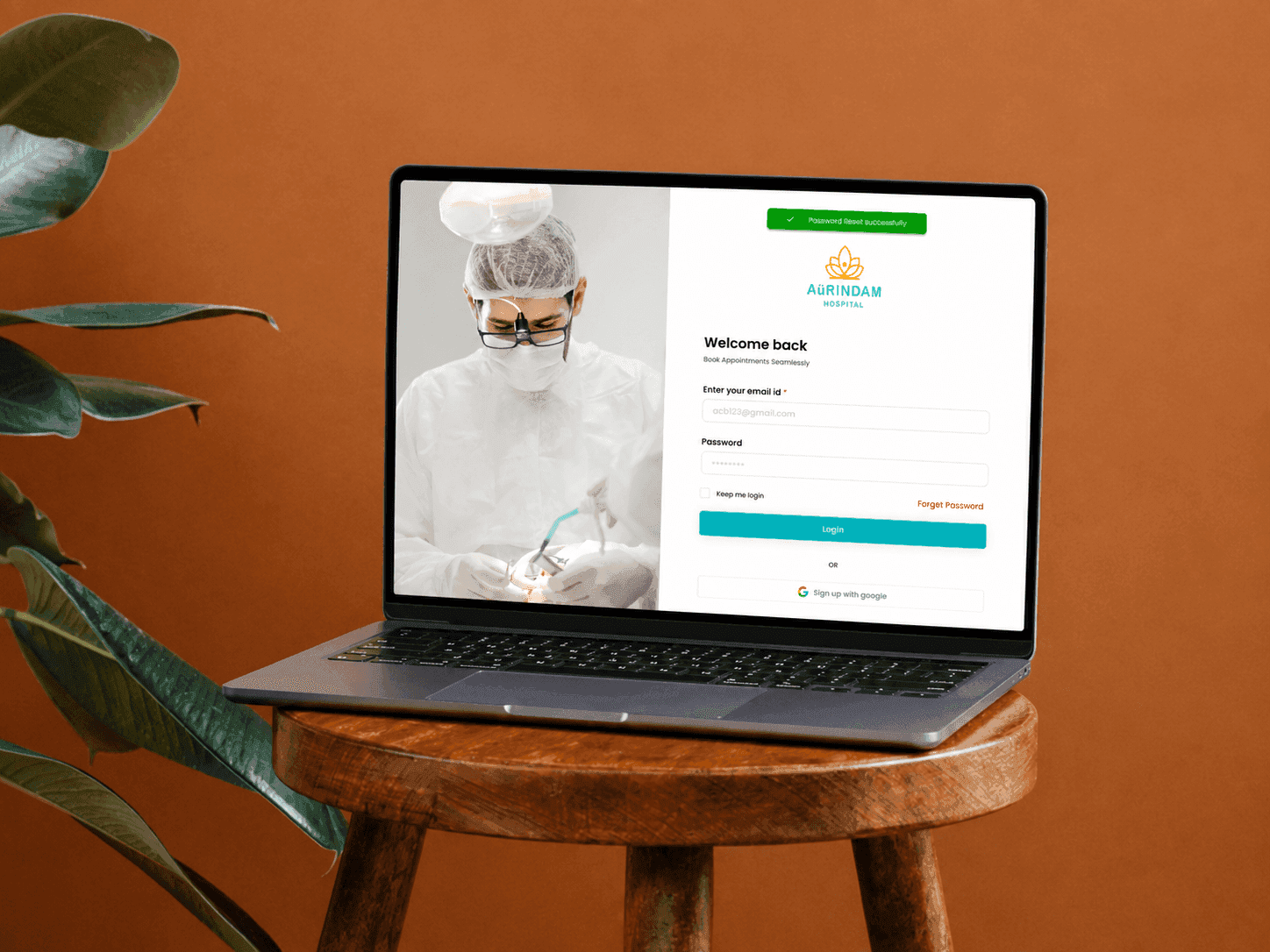
Healthcare apps are used by everyone, including older people and those who are not comfortable with technology. If booking takes too many steps, people give up and phone the hospital instead.
So we made every journey as short as we could. Booking takes a few taps. Registration asks for information once. Appointment status is always clear, with plain words instead of codes.
The design is calm and straightforward, because people using a health app are often worried. The look is meant to feel trustworthy rather than clever.
Architecture and delivery
The system has four front ends, the patient app, the doctor app, the reception portal, and the admin dashboard, sitting on shared core services.
Those services cover appointment scheduling, doctor availability, patient records, prescriptions, a medical reports store, notifications, role-based access control, and analytics.
The architecture supports more than one hospital branch, so the platform can expand to new departments, specialities, and locations without a rebuild.
Results
Faster booking. Patients book a consultation in minutes without going to the hospital.
Doctors work more efficiently. Appointments, patient history, and notes are in one place before each consultation.
Better patient experience. Simple booking, reminders, and digital records make care easier to reach.
Less admin work. Automatic scheduling and patient management reduce manual tasks for staff.
Records always available. Patients and doctors can find the information they need when they need it.
Ready to scale. The platform supports new departments, specialities, and hospital locations.
Conclusion
Medora Health closes the gap between patients, doctors, and hospital staff by putting them on one platform.
Appointments, patient records, doctor workflows, prescriptions, and hospital operations work together instead of separately. The result is care that is quicker to reach and simpler to manage, designed and built by Gunpowder Innovations.
Building something similar?
Let's talk about your healthcare project.
Product design, UX/UI design, Web and mobile development, Cloud infrastructure — the same team that delivered this can take yours from first sketch to launch.
More projects.

Interested in a quoted project?
Tell us a little about what you're working on. We take on a limited number of projects at a time, and we'll tell you honestly if we're the right fit.